Among the Asia-Pacific nodes, Singapore is renowned for its excellent connectivity and stable environment. This article focuses on "Long-term Stability Testing: Which Singapore Server Is Better for Long-Term Hosting Data Centers?" proposes quantifiable evaluation dimensions and practical methods to help technical teams make sound decisions.
The importance of long-term stability testing
Long-term stability testing not only focuses on short-term availability but also verifies long-term performance under different loads, network fluctuations, and environmental changes. Through continuous monitoring, periodic stress testing, and fault injection, the true reliability of servers and data centers under long-term hosting can be evaluated, avoiding frequent interruptions or performance degradation after going live.
Advantages and considerations of Singapore data centers
Singapore enjoys a prime geographic location, serving as a regional traffic hub with abundant international connections. When selecting a local data center, attention should be paid to the upstream network of the data center, interconnection partnerships, infrastructure level, and physical security. During evaluation, consider business latency requirements and target user locations to determine whether long-term hosting in Singapore data centers is the best strategy.
Methods for testing network connectivity and bandwidth stability
Network testing includes multi-node ping/latency monitoring, packet loss rate statistics, jitter analysis, and long-term TCP/HTTP throughput testing. It is recommended to conduct tests during real business hours and peak periods, combined with tools such as MTR and iperf for continuous sampling, to obtain quantifiable indicators of bandwidth stability and link redundancy.
Hardware and power redundancy and environmental control
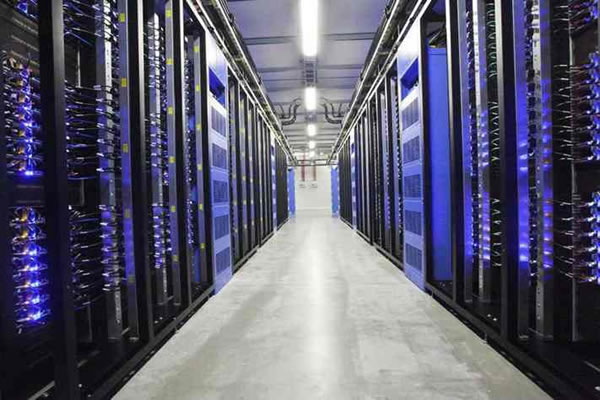
Long-term hosting requires hardware redundancy, power N+1 or higher, availability of UPS and diesel generators, and effective cooling solutions. Evaluate the layout of server room cabinets, temperature and humidity control strategies, heat aisle management, and hardware lifespan prediction to ensure that hardware failure rates and environment-induced performance fluctuations during long-term operation remain within controllable ranges.
Security and compliance requirements
Data center security includes physical security, identity authentication, video surveillance, as well as network layer DDoS protection and intrusion detection. For long-term custody involving sensitive data, compliance certificates, data sovereignty constraints, and audit capabilities must be verified to ensure the data center meets the enterprise's long-term compliance and audit needs.
Monitoring, maintenance, and service response
Long-term stability largely depends on operations and support capabilities. Evaluate the monitoring platforms, alarm policies, remote operation and maintenance interfaces, and SLA response times provided by the data center. For long-term hosting, it is recommended to establish 24/7 monitoring, automated alerts, and clear fault escalation paths to ensure issues can be quickly identified and restored.
How to choose a data center suitable for long-term hosting (evaluation process).
Develop a scoring matrix and quantify key metrics: network availability, average recovery time, hardware redundancy level, physical security, compliance certificates, and cost controllability. Conduct POC or trial runs, record long-term data, compare it with target SLAs, and ultimately determine the "long-term stability testSingapore servers are better suited for long-term hosting data centers" based on quantifiable results.
Common Misconceptions and Precautions
Common misconceptions include focusing only on single peak tests, ignoring long-term operational costs and compliance, and overly relying on short-term preferential decisions. When choosing a long-term colocation data center, prioritize long-term stability and sustainable service, avoiding making a final decision based solely on promotional materials or single-test results.
Summary and suggestions
When selecting a Singapore data center suitable for long-term hosting, long-term stability testing should be the core, combined with multi-dimensional evaluation including network, hardware, power, security, and operations and maintenance. It is recommended to first conduct small-scale, long-term trial runs, collect periodic data, and then scale up to ensure the hosting environment meets business stability requirements in terms of time.
- Latest articles
- New Users Should Know How Long It Takes To Try A Malaysian VPS To Verify Stability And Compatibility
- Detailed Explanation Of Data Sovereignty And Legal Compliance Considerations For Cloud Servers In Japan
- Performance And Optimization Suggestions For Taiwan CN2 In Cross-border Communication
- Why Are Young Viewers So Captivated By The Charm Of Thai Variety Show Data Centers?
- Analysis Of The Impact Of Vietnam's CN2 Regional Coverage And SEO On Local Rankings
- Want To Know If Tencent Cloud Has Korean Servers? Actual Access Latency And Performance Review
- Comparison And Purchase Reference For Direct Supply And Agent Prices For Malaysian Server Supply Channels
- Practical Sharing Of How To Log In To Alibaba Cloud Servers In Japan And Execute Emergency Fault Handling Cases Using A Mobile Phone
- How To Determine Which US Server Hosting Provider Is Best: Analyzing Both Service And Reputation
- Where Can I Find Affordable And Reliable Entry-level Cloud Server Recommendations For Small Businesses In Vietnam?
- Popular tags
-

What Should I Do If My Access To The Singapore Server Is Slow? Cdn And Link Optimization Strategies
what should i do when accessing a singapore server is slow? this article provides executable optimization strategies and process suggestions from the aspects of cdn caching and edge computing, link optimization, dns tuning, multi-line and bgp, monitoring and testing, etc. -

Cn2 Singapore Vps Analysis On Seo Friendliness And Tips For Improving Site Inclusion
analyze the impact of cn2 singapore vps on seo and geo optimization, covering technology and content strategies for delay, bandwidth, ip geographical location, cdn cooperation, dns stability and site inclusion improvement. -

Alibaba Cloud Singapore Hong Kong Cn2 Selection Suggestions And Best Practices For Geographical Redundancy
selection recommendations and best practices for regional redundancy for alibaba cloud's singapore and hong kong cn2 networks, covering core points such as network differences, latency evaluation, deployment strategies, dns and load balancing, compliance and monitoring, to help enterprises improve reliability and user experience.